Multilingual Restaurant Booking in Bali: What 2026 Data Shows
More than one in eight online bookings at Revasi venues in Bali is made in a language other than English. Here are the numbers by language, where they show up most, and how the booking page handles it.
 Yulia RahayuClient Manager, Revasi
Insights6 min readPublished on November 6, 2026
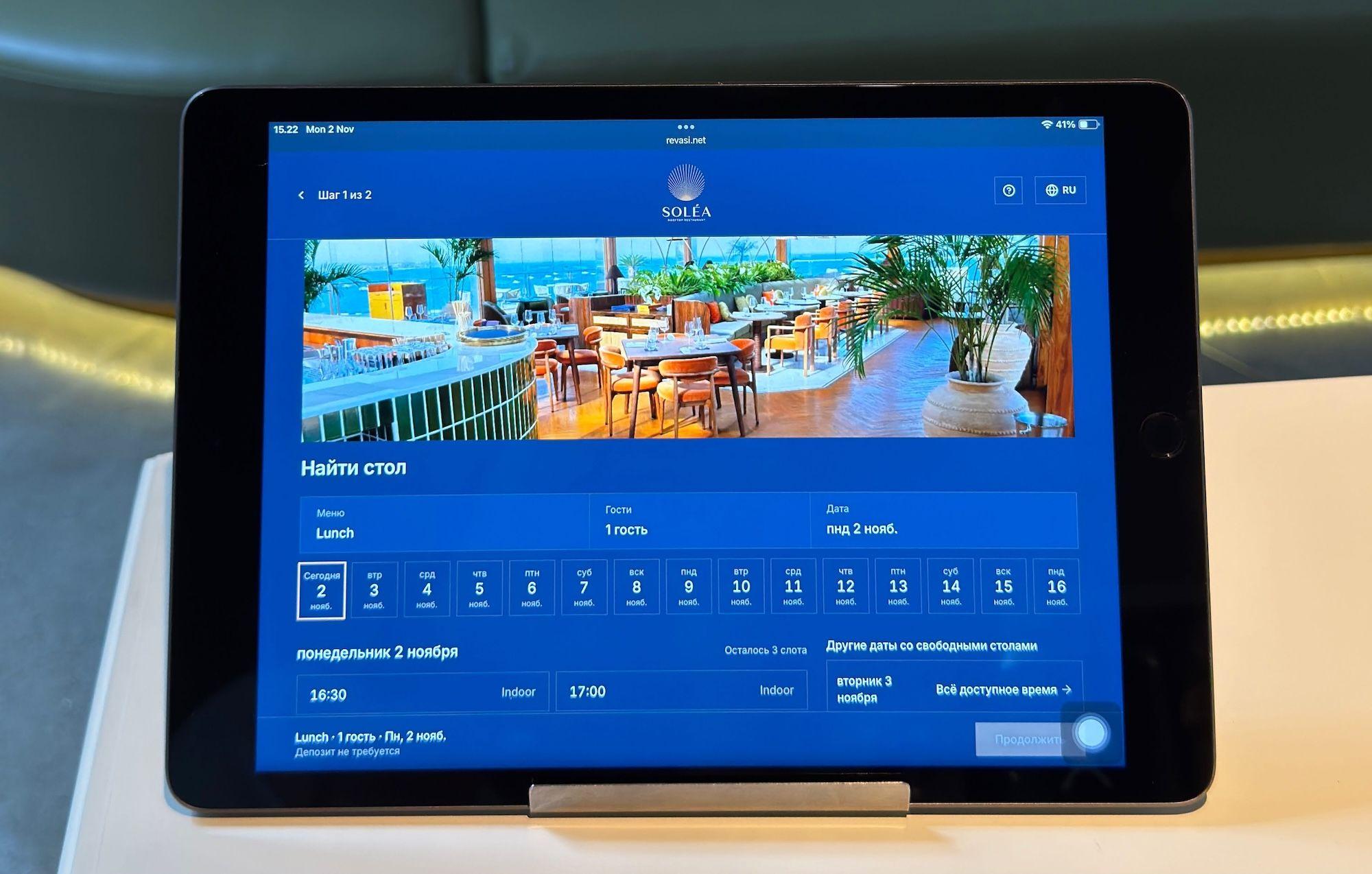
Guests planning dinner in Bali usually book on their phone, often weeks before they land. A booking page that only speaks English asks some of them to do the work of translating it themselves.
Every Revasi booking page does that work for them. It opens in the guest's own language, with nothing for the venue to set up, and keeps that language on the booking so the team knows before the guest arrives. And because the language is saved, we can now show how often it matters: more than one guest in eight books in a language other than English.
Key Takeaways
- Every Revasi booking page is available in seven languages: English, Simplified Chinese, Traditional Chinese, Indonesian, Japanese, Korean and Russian
- The page opens in the language the guest's phone or browser already uses, with nothing for the venue to set up
- Guests can switch language at any time, and the language they book in is saved on the booking for the team to see
- Between 22 August and 5 November 2026, 12.8% of online bookings at Revasi venues in Bali were made in a language other than English, more than one in eight
- Chinese leads at 6.0% of bookings, followed by Indonesian at 3.8% and Japanese at 1.8%. Korean, added in October 2026, is already at 1.1%, and Russian followed later that month
- Booking language is not nationality, so Revasi asks nationality as a separate, optional question
How Does Revasi Support Different Languages?
Language support on Revasi works in three steps: the page offers seven languages, opens in the right one for each guest, and saves that language on the booking. None of it needs setting up by the venue.
Seven Languages on Every Booking Page
Languages: English, Simplified Chinese, Traditional Chinese, Indonesian, Japanese, Korean and Russian
Set-up for the venue: none
Newest addition: Russian, live since late October 2026, following Korean earlier that month
Every Revasi booking page comes with all seven. The venue's brand, photography and booking flow stay the same in every language.
The Page Opens in the Guest's Own Language
When a guest opens the booking page, it appears in the language their phone or browser already uses. A guest whose phone is set to Chinese sees the page in Chinese, without looking for a menu or a flag.
If they would rather book in another language, they can switch at any time.
The Language Travels With the Booking
Whatever language the guest books in is saved on the booking. Your team sees it in the booking details before service, so a guest who booked in Japanese is no surprise at the door.
Language is not the same as nationality. A Japanese guest living in Singapore may book in English. That is why Revasi also asks nationality as a separate, optional question, so your team sees both.
How This Data Was Built
Seven languages only matter if guests use them. Because the booking language is saved, we can now measure how often they do.
The numbers come from every online booking made on a Revasi booking page in Bali between 22 August and 5 November 2026. That is 6,050 bookings with a language recorded.
22 August is the day booking language started being saved. Earlier bookings carry no language, so they are left out rather than guessed.
Bookings entered by staff, and walk-ins, are not included, because the guest never used the booking page. Individual venues are described, not named.
Which Languages Do Guests Book In?
English still carries most bookings, at 87.2%. The other 12.8% splits across five languages, each with its own pattern.
| Language | Share of online bookings | Unique guests | Where it shows up most |
|---|---|---|---|
| Chinese | 6.0% (4.5% Simplified, 1.5% Traditional) | 328 | Ubud: a cocktail bar and two fine-dining restaurants |
| Indonesian | 3.8% | 222 | A grill restaurant, 7.8% of its bookings |
| Japanese | 1.8% | 103 | An Ubud fine-dining restaurant, 3.5% of its bookings |
| Korean | 1.1% (68 bookings) | 66 | A grill restaurant, 2.7% of its bookings |
| Russian | 0.1% (6 bookings) | 6 | Live since late October 2026 |
Chinese
Share of online bookings: 6.0% (4.5% Simplified, 1.5% Traditional)
Unique guests: 328
Where it shows up most: Ubud, at a cocktail bar and two fine-dining restaurants
Chinese is the largest language after English at Revasi venues in Bali, and Simplified Chinese makes up most of it. It is also the most concentrated: at one Ubud cocktail bar, two bookings in five are made in Chinese.
Indonesian
Share of online bookings: 3.8%
Unique guests: 222
Where it shows up most: a grill restaurant, at 7.8% of its bookings
Indonesian bookings most likely come from domestic travellers and Bali residents. They cluster at a few venues rather than spreading evenly.
Japanese
Share of online bookings: 1.8%
Unique guests: 103
Where it shows up most: an Ubud fine-dining restaurant, at 3.5% of its bookings
Japanese bookings lean towards Ubud, led by one fine-dining restaurant where they make up 3.5% of all bookings.
Korean
Share of online bookings: 1.1% (68 bookings)
Unique guests: 66
First recorded: 8 October 2026
Korean was added in October 2026 and has grown faster than any other language since. More than half of Korean bookings so far are at one grill restaurant, where Korean is now 2.7% of all bookings. A few weeks of data is still early, so it is worth revisiting next season.
Russian
Live since: late October 2026
Russian is the newest language on the booking page. Six bookings so far, at four venues, is too few to read a pattern into yet. We will add more detail when we next update this piece.
What Should Your Team Do With It?
The language a guest books in tells you something before they arrive. A few ways venues can use it:
Brief the floor before service. Check tonight's bookings by language, and put a team member who speaks it at the right tables. A greeting in a guest's own language costs nothing and is remembered.
Translate what matters most. Across Revasi venues in Bali, about one booking in seventeen is made in Chinese, and at one Ubud cocktail bar it is two in five. Where your own share runs high, a translated menu or wine list earns its place. Start with the items guests order before they sit down: pairings, set menus, upgrades.
Write experiences for every guest. A chef's table or a pairing described only in English reads differently to someone booking in Japanese. Keep descriptions short, concrete and easy to translate.
Watch the mix change with the seasons. Holidays in China, Japan and Korea, and long weekends in Indonesia, move the numbers from month to month. Check your own mix again after each peak.
A Closing Note
These numbers will move. Korean is only weeks old, Russian has just arrived, and high season brings a different mix of guests than October does. We will update this piece as the data grows.
What will not change is the reason it matters. Most guests book a table on their phone, often before they land in Bali. A booking page in their own language, under the venue's own brand, is one less reason to book somewhere else.
It is the same booking page guests use at Soléa, Pasar and Barō every day.
See how it works → revasi.net
Frequently Asked Questions
What languages can guests book in on Revasi?
Seven: English, Simplified Chinese, Traditional Chinese, Indonesian, Japanese, Korean and Russian. Korean and Russian were both added in October 2026.
Does the venue need to set anything up?
No. The booking page opens in the language of the guest's phone or browser, and the guest can switch to their preferred language. Every Revasi booking page includes all seven languages.
Can a guest change the language while booking?
Yes. A guest can switch language on the booking page at any time, and the language they finish in is saved with the booking.
Which language is most common after English in Bali?
Chinese, at 6.0% of online bookings between 22 August and 5 November 2026. Indonesian follows at 3.8%, then Japanese at 1.8%.
Does the booking language tell you a guest's nationality?
Not always. A Japanese guest living in Singapore may well book in English. Revasi asks nationality as a separate, optional question at booking, so the team sees both.
Related reading: why your reservation system should confirm bookings on WhatsApp, and what to look for in a restaurant reservation system in Asia.
Writes about how high-end venues actually run service: bookings, upgrades, and turning first-time guests into regulars.
Keep reading.
Booking Restaurants Through AI: What 2026 Data Shows
Insights · 6 min read · November 14, 2026

What Good Reservation System Onboarding Looks Like
Insights · 9 min read · October 19, 2026

Reserve with Google: The Upgrades, Experiences and Guests You Lose
Insights · 12 min read · October 8, 2026